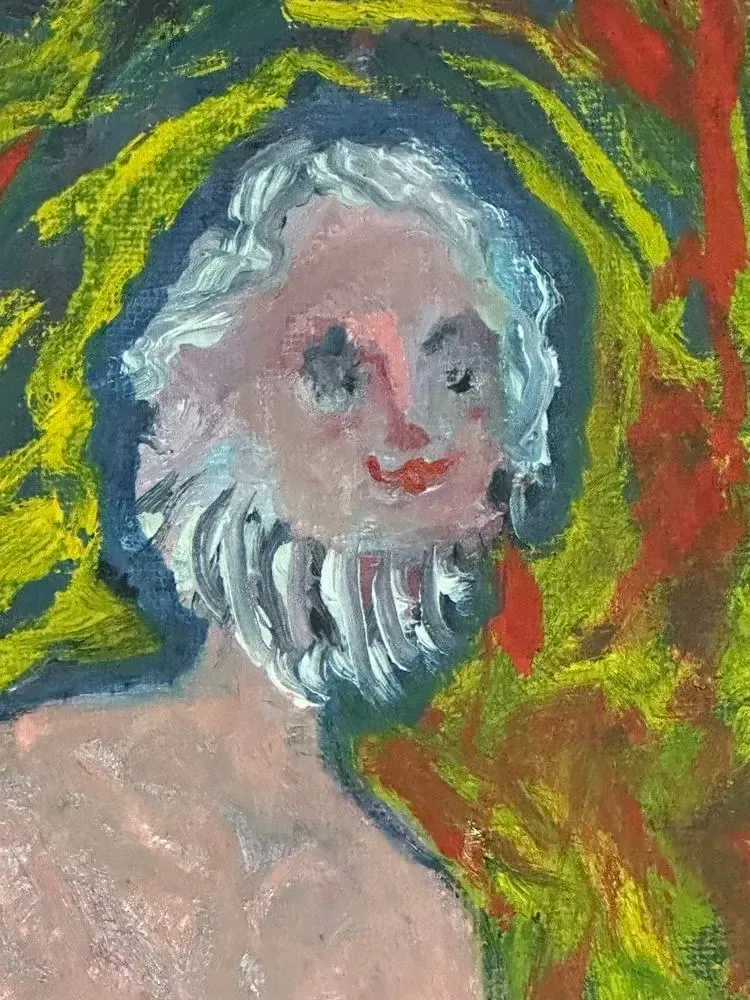
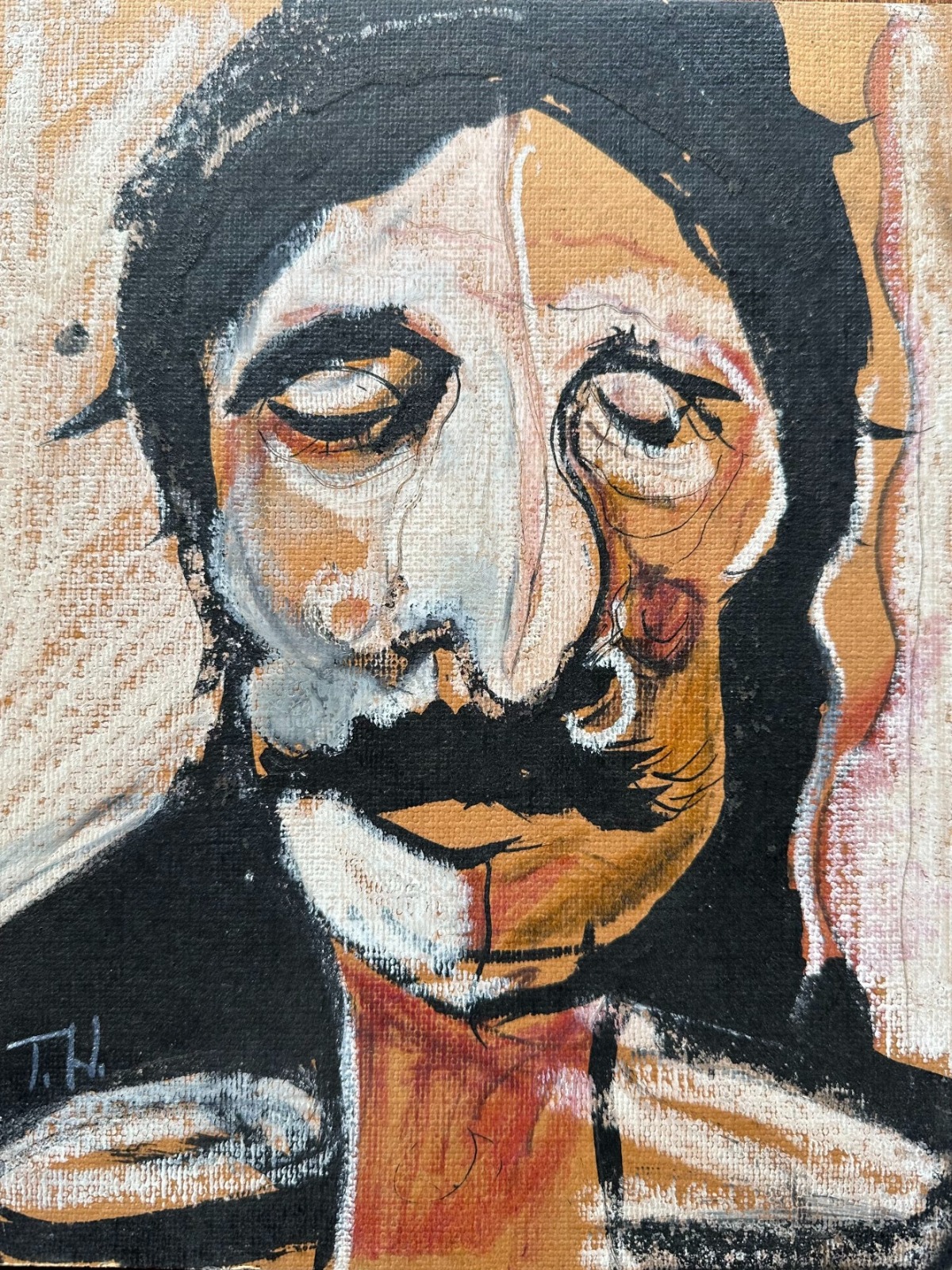
Jerry Jofen and Tom were good friends in the late sixties, when we lived in New York City. Jerry was also an artist, and was interested in Tom's abstract paintings and collages. Tom was just a young man, working as the head gardener in the sculpture garden at the Museum of Modern Art, and Jerry was a successful artist and filmmaker. The filming projects were intense, and Tom helped him with all the heavy equipment that was necessary for the production. Tom carried the cameras for Jerry, and also helped him get his work to the museums that were showing his work. Jerry's experimental films were getting recognation as he was part of the avant-guard underground filmmaking movement. Jerry would use experimental forms and edit the film in his mind to produce a new style of filmmaking, almost like a film collage. Many of his films have not survived, but the ones that did are treasured in museums in Manhattan.
He was also a painter, and developed complicated collages. He had many shows, and ran a gallery for a while. Tom was always impressed with Jerry's talent and attitude. At the end of one show in Grenwich Village, Jerry went to the gallery and picked up the paintings that had not sold. He walked around Washington Square, placed these paintings for all to see, and walked away, leaving the paintings for anyone to take home. Like Tom, he was interested in the creative experience, with little regard for the business of selling art.
Jerry was born in Poland in 1925, and escaped to America in 1941, with his parents, as the Nazi forces were expanding their occupation in Europe. They travelled through the Soviet Union, then to Japan, where they got on the last boat out, just before the war expanded, heading to America and freedom. Times were trecherous and their survuval was uncertain. They landed in San Francisco, then he later moved to New York City. Jerry was a refugee here, and was able to assimilate into the creative culture and pursue his unique artistic path. He started painting, then produced collages he made from material that he found around the city. He was intelligent and extremely creative. His talent was recognized in the art world, as he transitioned from painting to collage work. and then filmmaking. Throughout his adult life, Jerry created art, and was always pondering his next creation. Once a piece was done, he felt complete, and gave many of his works away to anyone who appreciated them. Very few of his of his works have survived, but, he remains an important figure of enduring influence in the underground. He was happiest when he was creating, but, in quiet reflextive moments or while he was talking about his childhood, his dark eyes and mystic gaze held a secret sorrow.
We lived downtown in Manhattan, in an "A.I.R." , an artist in residence loft, where Tom built a home for us and a studio where he could paint. Jerry and his wife, Ellen, lived in Brooklyn at that time. We would walk across the Brooklyn Bridge to visit them. We always enjoyed spending time with them, and we met many other contemporary artists there. We were invited to attend "happenings", which were unpredictable gatherings of artists in a performance event that encouraged audience participation. They were a wild collection of people; the event was based around a theme, but, anything could happen! Jerry and Ellen had an unusual and unpredictable lifestyle. Ellen worked at night at the legendary "Max's Kansas City", a famous gathering place for contemporary artists and musicians. She provided the financial support and stability that allowed him to explore his spirituality and express himself through art. As he grew older and disabled, she cared for him with love and devotion. Many of Jerry's creations have disappeared, but, his influence on the art world endures in the freedom of expression of individual style, combining spontaneous emotions, colors, spirituality, and vision.
The last time we were with Jerry was in 1971. We were headed back to California with our newborn son, Nya, and stopped at Jerry's home in Brooklyn. Jerry wanted to hold Nya, and he spoke quietly to him in words that sounded like a blessing. We never saw him again; Jerry passed away in 1993.